
How Much Does a Tailor-Made Suit Cost in Houston?
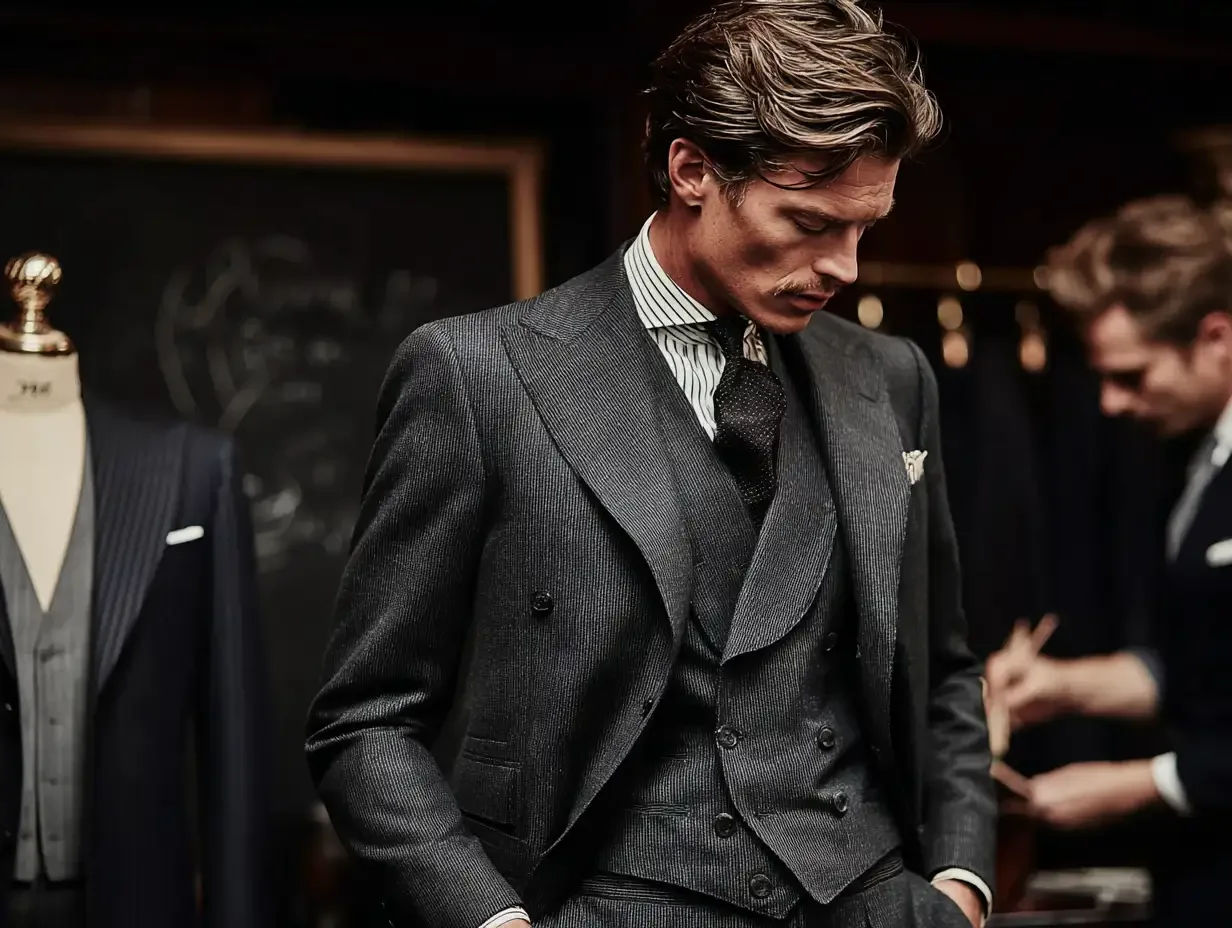
Tailor-made suit
Houston is not a suit city. The heat alone sees to that. Most men here wear one a handful of times a year at most, which means they have never had much reason to think carefully about what a good one should cost. They know a suit from Indochino costs a few hundred dollars and a suit from a bespoke tailor costs more, but they do not know what they are actually paying for in either case, or what they are giving up.
That lack of context is worth addressing before you spend money on a tailor-made suit. At B. Kreps, bespoke starts at $1,295, and understanding what that buys you, and what cheaper alternatives are actually selling, makes the difference between a good decision and an expensive one.
"Tailor Made" Means Something Different Depending on Who Is Saying It
Walk into almost any menswear shop today and you will find some version of the words tailor-made or custom on the wall. They cover a wide range of processes that produce very different results.
There are three things those words are usually describing.
Made-to-measure starts with an existing pattern and adjusts it to fit your measurements. A salesperson takes your numbers, and those numbers are applied to a base pattern built for someone else. For men whose proportions are close to the base pattern, it can produce a decent result. For everyone else, it produces a suit that is closer than off the rack but still not quite right.
Bespoke means a pattern drafted from scratch for your body. Not adjusted, not approximated. Built from the ground up using your specific measurements and, more importantly, what a trained eye observes about how your body actually carries itself. A true bespoke process includes at least one fitting in a try-on garment before the final suit is ever cut.
The third is the grey area is everything marketed as bespoke or tailor-made that is neither. Some shops use the words to describe made-to-measure with more options. Some offer a single fitting but work from a modified stock pattern. The words tell you nothing. The process behind them does.
At B. Kreps, the process is bespoke in the original sense. A pattern is built for you, a try-on garment is fitted on your body with real-time adjustments, and that becomes the blueprint your suit is cut from.
What Makes Up the Cost of a Suit
When the price of a tailor-made suit goes up, something specific is driving it. When it drops, something is being cut.
Pattern making and fittings are the most labour intensive part of the process and the first thing that gets reduced at lower price points. A true bespoke pattern takes a skilled cutter significant time to develop. Each fitting requires a trained eye and hands-on adjustments. That time has to be accounted for in the price.
Construction is where the difference between a $400 suit and a $1,500 suit often shows up most clearly, even if it is not immediately visible. How a jacket is canvassed, how the chest piece is built, how the seams are finished. These affect how the jacket drapes, how it moves, and how it holds up over years of wear. A fully canvassed jacket, where an internal layer of canvas is hand-stitched to mold to your chest over time, takes considerably more time to construct than a fused jacket where that layer is simply glued.
In Houston, the heat and humidity put more stress on a suit than a temperate climate does. Fused construction can delaminate over time, and that process accelerates with repeated exposure to heat and sweat. A suit you wear to a long day downtown or a summer event will show the difference between good construction and poor construction faster than the same suit worn somewhere cooler.
The people doing the work matter as much as the process. Pattern cutters and tailors with decades of experience cost more than those without, and that expertise shows up in the finished garment in ways that are difficult to quantify but easy to feel.
Fabric is the most visible variable in the cost of a tailor-made suit, but it sits on top of the construction cost, not in place of it.
How Fabric Choice Influences the Cost
The fineness of fiber is measured in microns and expressed as a Super number. A Super 100s is a durable, reliable everyday cloth. A Super 150s is finer and softer but more delicate. Higher does not always mean better. It depends on how often you plan to wear the suit and what you are wearing it for.
The mill matters too. Fabrics from Loro Piana, Dormeuil, and Holland & Sherry carry higher price tags because the raw materials and the weaving process behind them are genuinely different. That difference shows up in how the cloth feels, drapes, and wears over time.
For Houston specifically, weight and weave matter as much for comfort as for looks. A tropical weight wool breathes in the heat in a way that a heavier cloth does not. If you are wearing the suit to an outdoor event in May or walking between buildings in July, the fabric is doing real work.
At B. Kreps, the fabric conversation happens in person. We can show you how different cloths feel and move and help you find something that conveys your style. The cost moves based on the chosen fabric. The process and the attention you receive do not change.
Why Spending Less on a Suit Usually Costs You More Later
A cheaper suit rarely stays cheap once you factor in what comes after.
A lot of men in Houston run into the same pattern. A man needs a suit for a specific occasion. He buys something off the rack or a made-to-measure option at a moderate price point, and it fits well enough to wear. Then it goes to a tailor for alterations. The shoulder is slightly off but nothing can be done about that. The sleeve pitch is wrong but that cannot be corrected after the fact. Money gets spent trying to fix something that was never built correctly, and the suit still does not feel right.
Then it happens again for the next occasion.
Over a few years that adds up. The alterations, the replacement when the fused chest starts to bubble or the fabric thins at the elbows, the next purchase that goes through the same cycle. Working with a Houston tailor who builds from your body rather than an averaged pattern costs more upfront. Over time it costs less.
That is what the B. Kreps process is built around.
What the B. Kreps Process Delivers
At B. Kreps, every client goes through the same process. No simplified version for the entry price point, no premium tier that unlocks more attention or care. The process is the same regardless of where you land on fabric.
That process starts with a fitting where we assess more than 35 fit points directly on your body, using a try-on garment rather than a measuring tape. Not measurements written down to be interpreted later. Physical corrections made in the room, on you, that become the pattern your suit is cut from. We are accounting for the way your shoulders sit, the way your posture carries your chest, the length of your torso relative to your arms.
That pattern goes to our atelier in Amsterdam, where the suit is constructed. When it comes back, we meet again, check how everything sits, and perfect the fit.
If you have been wearing suits that never quite felt right, or spending money on alterations that never fully solved the problem, come and visit us at one of our Houston showrooms or book an appointment for your first bespoke commission.