
A Houston Tailor’s Guide to the Perfect Suit Jacket Fit

Guide to the perfect suit jacket fit
You've worn a suit jacket that didn't feel right. Maybe the sleeves twisted when you reached for something. Maybe the back pulled when you sat down. Maybe you sweated through it before you made it from the valet stand to the door.
In Houston, that last part matters as much as the others. When fit is off, you feel it before you can explain it. When it's right, you stop thinking about what you're wearing entirely. Moving between 95-degree heat and air-conditioned rooms makes a jacket that truly disappears harder to find and more worth having than most men realize.
Nobody ever showed most men what to look for. Here's what we look for at B. Kreps.
Suit Jacket Fit Starts With the Shoulder
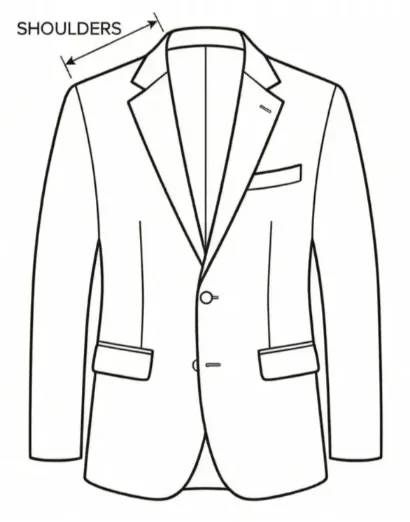
The shoulder seam should sit exactly at the edge of your shoulder. Not onto your arm, not creeping toward your neck. Right at the break point.
If it hangs past your shoulder, you'll see a divot below the seam and the jacket looks like it belongs to someone bigger. If it pulls inward, the upper back goes tight and the sleeve gets dragged with it.
This matters everywhere, but it matters more in Houston because heat changes how you carry yourself. When you're warm, your posture shifts. A shoulder that barely worked in the showroom will announce itself the moment you step outside in July. Get the shoulder right and everything else has something correct to work from.
The Chest Should Hold Without Pulling
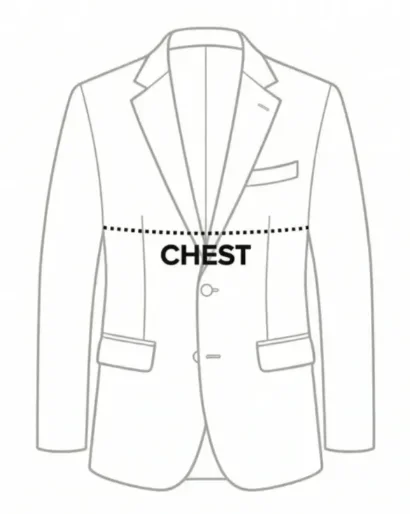
Fasten the button and look at the front of the jacket. The lapels should lie flat against your chest. If they bow outward or the fabric pulls across the button, the jacket is too tight in the chest. If there's excess fabric bunching on either side, it's too loose.
A useful test is to pinch the fabric at the side seam. You should be able to gather about an inch on each side. More than that and you have room to spare. Less and you're working against the fabric every time you move.
In Houston, chest fit has an added dimension. The more fabric sitting against your body, the more heat it traps. A chest that's even slightly too generous means unnecessary weight and warmth. Getting the chest right isn't just about how the jacket looks. It's about how long you can comfortably keep it on.
The Back Reveals How Well a Suit Jacket Was Made
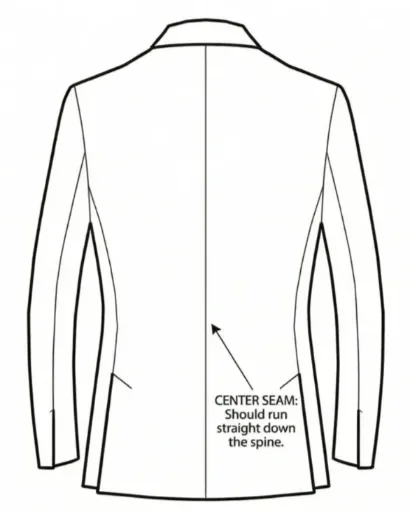
The centre seam should run straight down your spine. If it pulls to one side, the jacket isn't balanced on your body.
Look for horizontal creases across the upper back. That means the jacket is too tight across the shoulders and chest. Vertical creases or bunching below the collar means the jacket is sitting too high on your torso, or the back length doesn't match your proportions.
Check the collar separately. It should follow your shirt collar closely with no gap between them. A gap at the back of the neck usually means the jacket wasn't built for your posture, and no alteration fixes that cleanly.
Now sit down in the jacket. Not a careful, upright sit. The kind you do at a long dinner at Brennan's or in the back of a car on the way to an event. The back should stay smooth and the collar should stay put. If the fabric pulls across the shoulders when you settle into a chair, or the collar lifts away from your shirt, the jacket was fitted standing up and only works that way. For those who spend a lot of time seated, in restaurants, in offices, at events, that matters more than it might elsewhere.
The Sleeves Need to Hang Straight and End in the Right Place
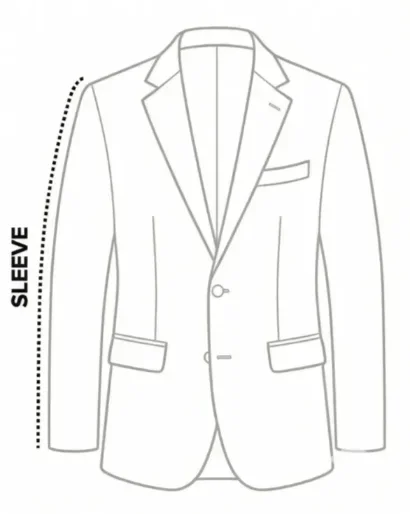
Two things matter with sleeves: how they hang and where they end.
Stand with your arms relaxed at your sides. The sleeves should fall straight without twisting forward or backward. A twist usually means the sleeve pitch is wrong, which is a pattern issue rather than something a tailor can press out.
Length is simpler. About half an inch of shirt cuff should show below the jacket sleeve. Enough to see that you're wearing a shirt, not so much that the jacket looks like it shrank.
In Houston, you will take your jacket off and on more than you think. The temperature difference between inside and outside can be fifteen degrees or more, and that means the sleeves get a real test. A sleeve that hangs correctly when you first put the jacket on should still hang correctly. If it doesn't, the pitch is off.
At B. Kreps, sleeve pitch and length are both addressed during the fitting process, so by the time your jacket comes back from Amsterdam, the sleeves hang the way they should.
Suit Jacket Length Is About Proportion More Than Rules
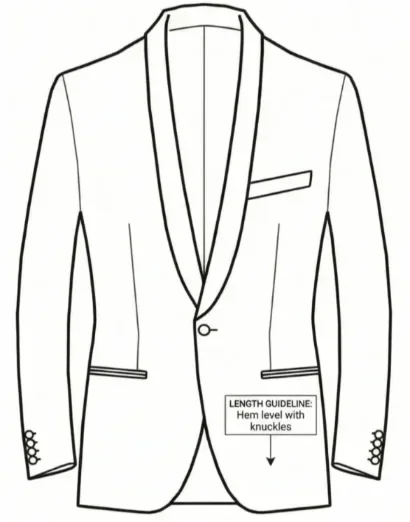
The standard guideline is that a suit jacket should cover the seat of your trousers, and your arms hanging naturally should bring your knuckles roughly level with the hem. Reasonable starting points, not always definitive.
What actually matters is how the length relates to your torso and leg proportions. Too short and your upper body looks stubby. Too long and the whole silhouette gets heavy.
In Houston's social calendar, where a suit jacket might carry you from a Galleria lunch to a wedding in the Heights, or give way to a custom tuxedo for a black tie evening, proportion does a lot of work. A length that reads correctly across all of those settings comes from a jacket built for your body, not someone else's.
Waist Suppression Gives a Suit Jacket Its Shape
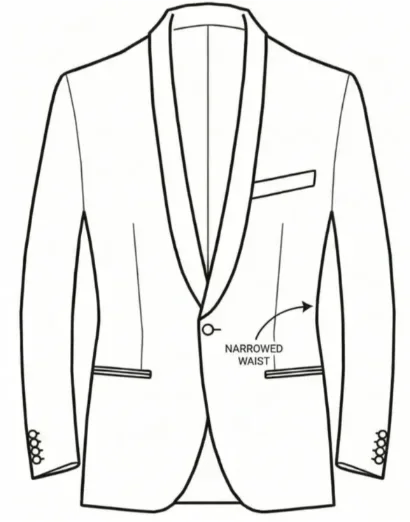
A jacket with no shape through the middle will look like a box regardless of how well everything else fits. Some narrowing through the waist is where the silhouette comes from.
How much depends on your build and what you need the jacket to do. This is where Houston's climate enters the conversation more directly. Lightweight suiting fabrics - the tropical wools, fresco weaves, and linen blends that make sense here - drape differently from heavier cloths. They tend to show suppression more clearly. A jacket that's over-suppressed in light fresco can look pinched in a way it wouldn't in heavier flannel. The right amount of shape is specific to the fabric, your build, and how much you need to move.
The mistake most men make is confusing suppression with tightness. A jacket that's simply too small through the midsection isn't shaped. It just restricts you.
At B. Kreps, waist suppression is something we work out with you in person. Fitting you in the room means we can see how your body carries itself, how much shape looks right on your frame, and how much room you actually need to move. That conversation can't happen over a measurement chart.
Why Most Suit Jackets Don't Fit
Ready-to-wear suit jackets are built around an averaged set of measurements. That average might be close to your body, but the further you are from it, the more you feel it. Shoulders slightly off. A chest that fits but a back that pulls. Sleeves hanging at the wrong angle. Each compromise on its own is livable. Together they add up to a jacket you're always adjusting.
In Houston, those compromises show up faster. The heat and humidity are less forgiving than a temperate climate, and a jacket that fits reasonably well in a photograph looks different after ten minutes outside in June. Made-to-measure can get closer - and alterations can patch some of this - but there's a ceiling. The shoulder can't be meaningfully changed. The sleeve pitch can't be pressed out. Some things can't be undone after the fact.
Working with a Houston tailor who builds from your body rather than an averaged pattern is the only way around this. At B. Kreps, we assess more than 35 fit points using a try-on garment, not a measuring tape, before anything goes to our atelier in Amsterdam. When the jacket comes back, it fits because it was made for you.