
The One Thing Houston Men Get Wrong About How Dress Shirts Should Fit

A Houston tailor’s guide to the perfect dress shirt fit
Most men have never worn a dress shirt that truly fits. I've spent years as a Houston tailor fitting men in this city, and almost every guy who walks through my door has learned to live with a shirt that doesn't work - the collar that shifts, the chest that pulls, the shirt that untucks itself by noon. They've made peace with it. They blame the heat, or their build, or just the way dress shirts are.
But most of the time, the problem isn't what they think it is. They'll point to the chest, or the collar. What they almost never notice is the shoulders, and that's the one thing that matters most, for one simple reason. Everything else can be fixed by a tailor after the fact. The shoulders are the exception. If they're wrong at the point of purchase, the shirt is wrong, and there's no correcting it.
I’ll walk you through every part of the dress shirt fit. But pay special attention to the shoulders, because getting that right is the foundation everything else is built on. And if you're dressing in Houston's climate, moving between blazing heat and a refrigerated office and layering a jacket on and off a dozen times a day, a shirt that doesn't fit in the shoulders is going to let you down every single time.
The Shoulders Need to Line Up Before Anything Else Can
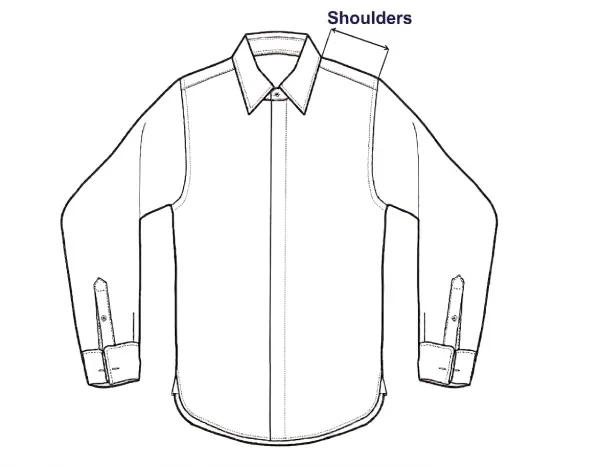
The shoulder seam - the line where the sleeve meets the body of the shirt - should sit right at the edge of your shoulder. Not past it, not pulled inward. Right at the break.
When it hangs past your shoulder, the sleeve collapses and the whole shirt reads as oversized. When it pulls inward, the back feels tight and the shirt never sits cleanly no matter how many times you adjust it.
In Houston, this becomes especially relevant because of the jacket situation. Most of my clients here are moving in and out of air-conditioned offices, cars, and restaurants all day. The jacket comes on when you walk in and comes off an hour later. When your shirt fits properly in the shoulders, it looks sharp with the jacket on and just as sharp without it. When it doesn't, taking the jacket off reveals every problem at once.
At B. Kreps, the shoulder is one of the first things we address in the fitting process. Because the shirt is built around your actual measurements from the start, the seam lands where it should without any guesswork.
The Collar Sets the Tone
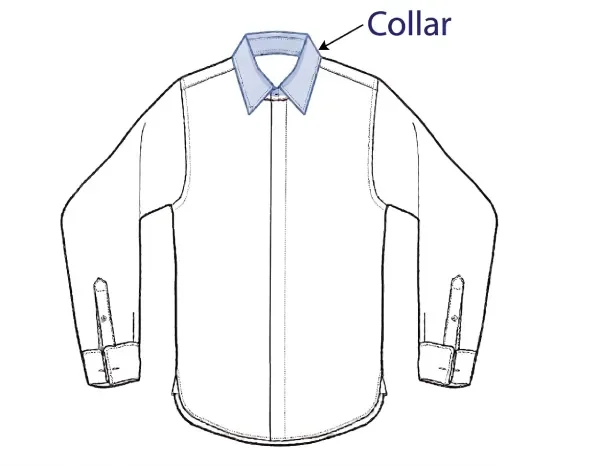
The collar is the most visible part of a dress shirt and the first place fit breaks down. It sits right below your face so when it's wrong, everyone can tell
With the top button fastened, you should be able to slide two fingers comfortably between the collar and your neck. Tighter than that, and it will feel restrictive by midday and leave a mark by evening. Looser than that, and it shifts with every turn of your head and pulls the whole shirt out of alignment.
A collar that fits fine in February can feel like a vice grip in August. The combination of heat and humidity makes anything too snug genuinely miserable, and it shows on your face long before it shows on your shirt. When a collar fits correctly, you stop thinking about it entirely.
Most off-the-rack shirts come in half-inch collar increments, which means the closest size is rarely your actual size. When a shirt is built to your exact neck measurement, that problem disappears.
The Chest and Torso Should Follow the Body Without Gripping It
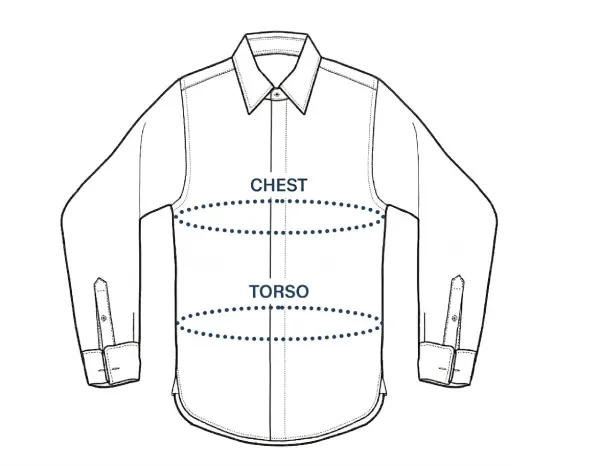
A dress shirt should follow the lines of your body through the chest and torso — not pull across it, and not hang off it.
When the chest is too tight, the fabric pulls horizontally between the buttons and the front of the shirt bows open. When it's too loose, excess fabric bunches at the sides and back, and no amount of tucking keeps it looking intentional.
In Houston's heat, a shirt that's too tight clings and shows sweat. Having just enough ease actually keeps you looking more composed, not less. It lets air move. It doesn't trap everything against your skin.
Houston is also one of the most physically diverse cities I've worked in. My clients range from athletic builds to larger frames to everything in between, and off-the-rack shirts are cut for a generic body and adjusted for nobody. The chest and torso are where that mismatch shows up most clearly. A shirt built to your actual measurements moves with you and stays put when you need it to.
Sleeves Should End Closer Than You Think
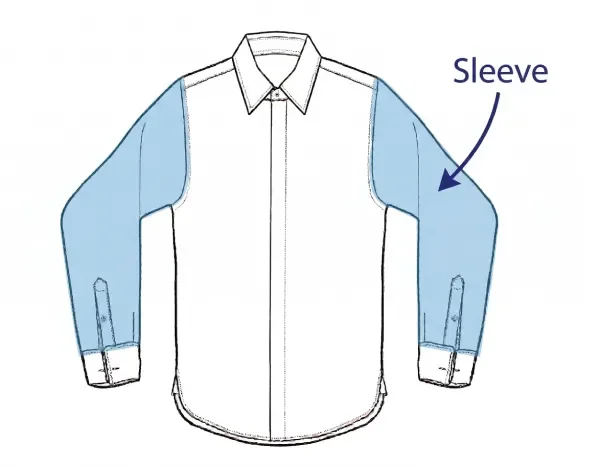
With your arms relaxed at your sides, the cuff of your sleeve should sit at the base of your wrist, right where it meets your hand. When you raise your arm or reach forward, about half an inch of cuff should appear below the jacket sleeve. Too short and it disappears inside the jacket. Too long and it bunches at the wrist and crowds the hand.
The width of the cuff matters as much as the length. A cuff that's too loose slides around and never sits cleanly. One that's too tight makes buttoning a small ordeal.
Off-the-rack sleeves increase in half-inch increments, and those increments rarely land on your actual measurement. Most men are wearing sleeves that are close but not right and have simply stopped noticing. When sleeve length and cuff width are both cut to your measurements, the cuff lands where it should and stays there whether you're sitting at a desk or reaching across a table.
Untucking Is Not Inevitable with the Right Length
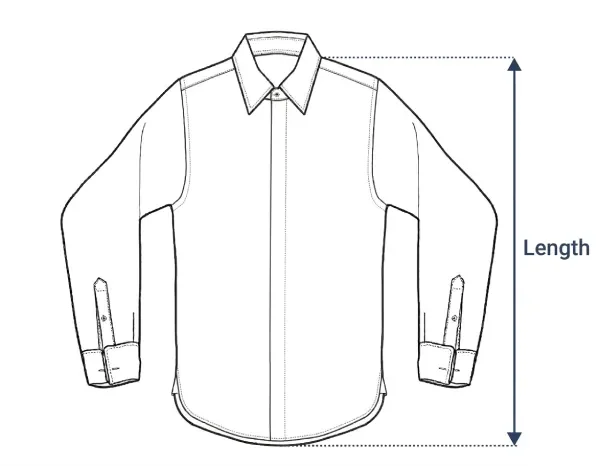
If you've ever spent a day constantly retucking your shirt, that's not just how dress shirts are. That's a sign the shirt is too short.
A shirt worn tucked needs enough length to stay put through a full day of movement. The shirt tail should extend far enough - front, back, and sides - that normal activity can't work it free. In Houston, where you're often moving between your car, a client meeting, and lunch in the same afternoon, a shirt that won't stay tucked looks unprofessional at exactly the wrong moments. A shirt cut for your specific torso length solves this without compromise.
Fabric Affects Fit More Than You'd Think
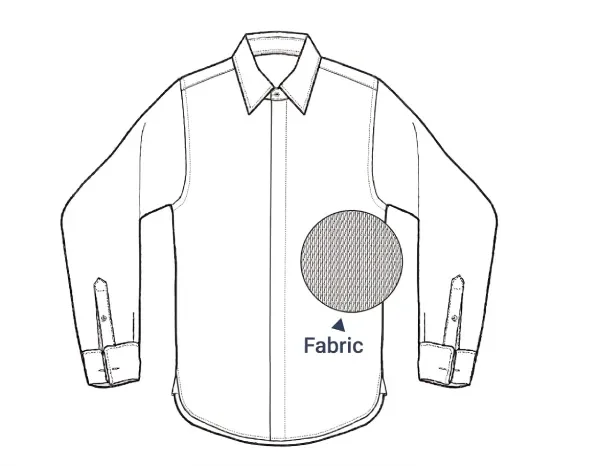
A dress shirt can feel fine in the store and fit noticeably differently after a few washes. Cotton shrinks, and how much depends on the quality of the fabric, how it was treated during manufacturing, and how it's cared for at home. A shirt that was already borderline in the chest before washing can become genuinely uncomfortable after.
For Houston clients, fabric also affects how a shirt performs across a long day. A lightweight poplin or linen-cotton blend in a well-fitted cut will look and feel far better than a heavier fabric in a sloppy one. The cloth and the cut work together. Higher quality cotton that's been properly pre-shrunk behaves more predictably over time — it doesn't close the gap entirely, but it narrows it significantly. The shirts we make at B. Kreps are cut from cloths we've vetted for exactly this reason.
Ready to Find Out What a Shirt that Actually Fits Feels Like?
A dress shirt built for your body doesn't ask anything of you. The collar sits comfortably all day. The shoulders line up without pulling. The chest has room to move without extra fabric working against you. The sleeves land where they should, and the shirt stays tucked without a second thought.
At B. Kreps, we fit using a try-on garment that lets us assess 35+ points on your body - far more than a tape measure can tell us. The result is a shirt that accounts for how you actually move, not just how you measure.