
How Long Should a Dress Shirt Be?
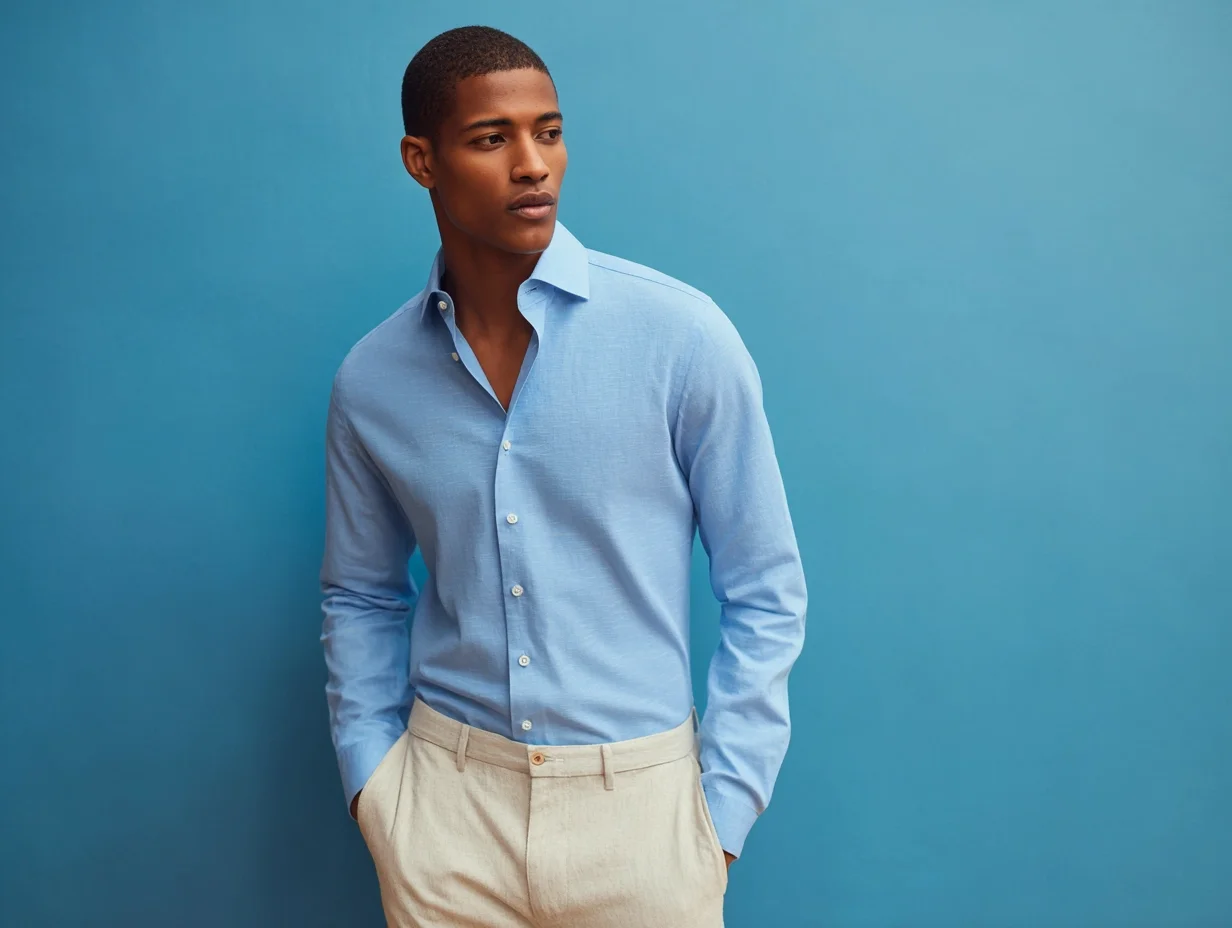
This is a deceptively simple question, because when clients ask how long a dress shirt should be, they are often reacting to discomfort or frustration caused by shirts that never quite behave the way they should. A properly made dress shirt should stay tucked when you move, feel comfortable when you sit, and never call attention to itself. Getting the length right is central to achieving that balance.
The Correct Length for Shirt Tails
Brian Kreps puts it plainly: the tail of your shirt needs to be long enough to stay tucked in, but not so long that you end up sitting on it once it is tucked. Excess fabric inside the trousers is not a sign of generosity or luxury. It is simply uncomfortable. On the other hand, a shirt that is too short will work its way out of the waistband throughout the day, especially when you reach, bend, or sit.
In practical terms, a well-proportioned dress shirt is cut so that the front and back lengths work together to secure the shirt inside the trousers without bulk. The back tail provides anchoring, while the front remains clean and controlled. This balance is difficult to achieve consistently with ready-to-wear shirts, which rely on generalized sizing and assume a standard posture and torso shape.
Why Bespoke Shirts Fit Better
This is where the bespoke process at B. Kreps becomes critical. Rather than relying on a tape measure alone, clients are placed into a try-on shirt. This immediately reveals posture issues, shoulder slope, collar height, and front-to-back body balance that tape measurements simply cannot show. Adjustments are made visually and physically, allowing the shirt to be shaped around the body rather than forcing the body to conform to a preset pattern.
The B. Kreps Process
Unlike most shirtmakers who measure the chest once and apply that number around the body, B. Kreps distinguishes between the front and back of the torso. This allows the shirt to sit cleanly at the collar and shoulders, eliminating pulling, gaping, or stacking of fabric behind the seat. The result is a shirt that stays tucked without excess length and remains comfortable whether standing or seated.
Sleeve length is resolved with the same level of care. A dress shirt sleeve should end at the break of the wrist, where the hand begins to widen. When worn with a jacket, at least half an inch of shirt cuff should be visible. This proportion creates a clean transition between shirt and jacket and reinforces the sense that the garments were designed to work together. Clients who wear cuff links may choose to show slightly more cuff, but the underlying principle remains balance and intention.
Once fit and style are established, a unique pattern is drafted and the shirt is cut from the bolt of cloth, not altered from a pre-existing template. After production, the shirt returns to Houston for a fitting, where any final refinements are made in-house. Every adjustment is logged so future shirts continue to reflect your evolving fit.
The entire bespoke process typically takes between five and six weeks. The outcome is a dress shirt that stays where it should, moves with your body, and disappears into your day in the best possible way: quietly doing its job.
Come and visit us at one of our showrooms in Houston or book an appointment for your first bespoke commission.
Heights
2313 Edwards Street
Unit 115
Houston, Texas 77007
(281) 799-4872
Downtown Tunnel Loop
919 Milam Street
Unit T0700
Houston, Texas 77002